Opinion
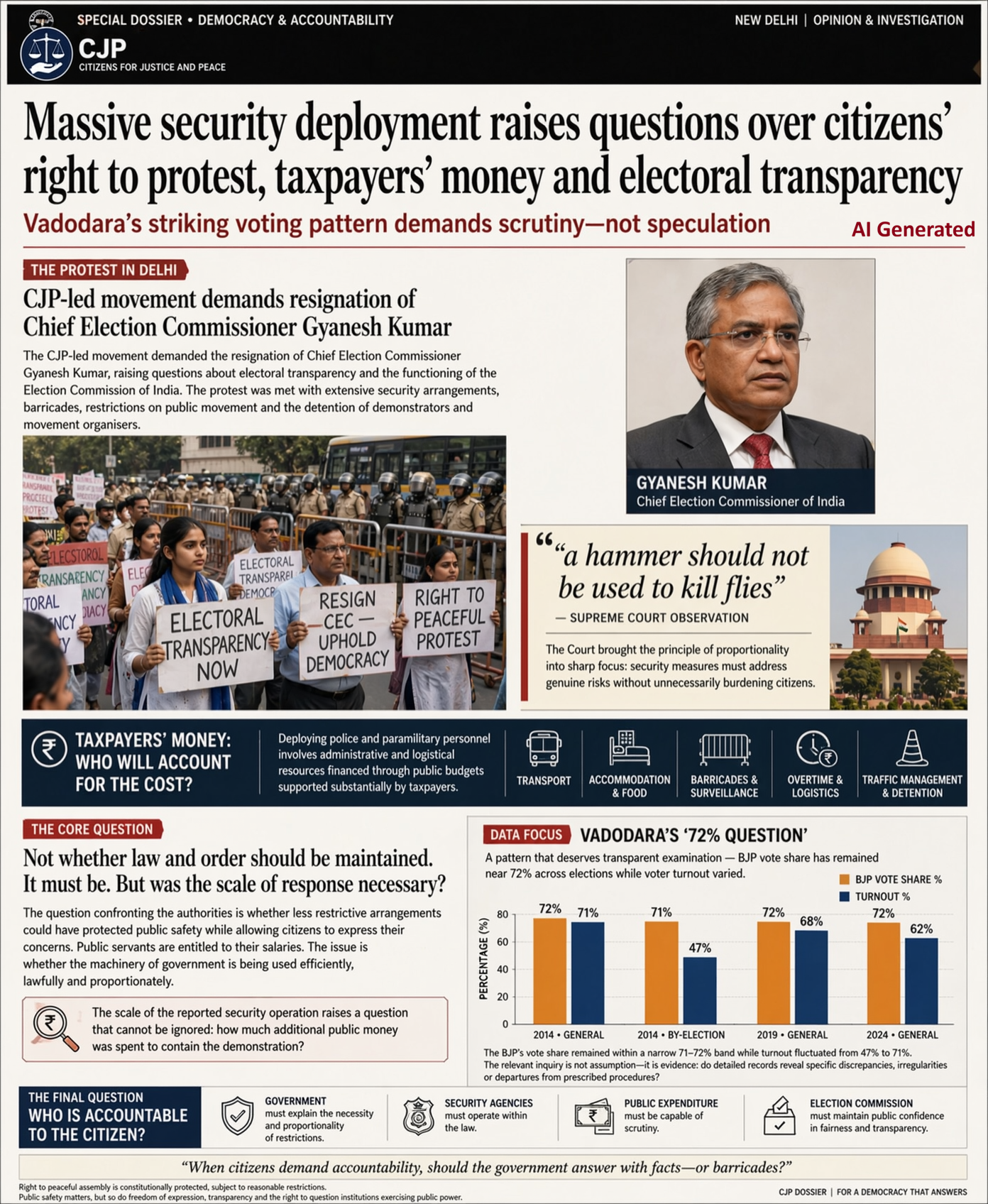
DEMOCRACY UNDER SIEGE? ‘HAMMER TO KILL A FLY’ WARNING AS DELHI POLICE DETAIN CJP PROTESTERS DEMANDING CEC GYANESH KUMAR’S RESIGNATION
Massive security deployment raises questions over citizens’ right to protest, taxpayers’ money and electoral transparency; Vadodara’s striking voting pattern demands scrutiny—not speculation The CJP-led movement demanded the resignation of Chief Election Commissioner Gyanesh Kumar, raising questions about electoral transparency and the functioning of the Election Commission of India. The protest was met with extensive security arrangements, barricades, restrictions on public movement and the detention of demonstrators and movement organisers. The controversy intensified following t
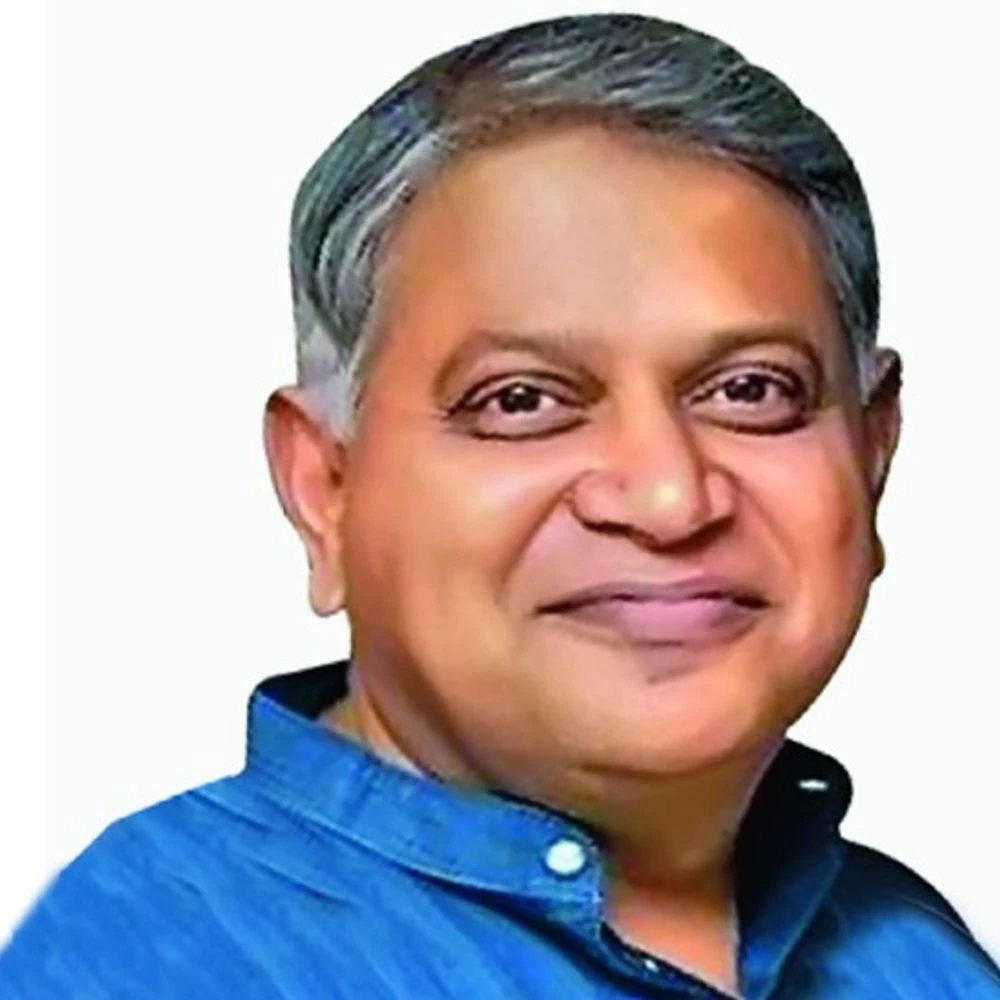
N. Raghuraman's column: The impact of things that happen in midlife is not limited to that
How you treat your body and mind in the midlife years (roughly 36-60 years) can have a huge impact on how you age in the coming decades. In short, midlife health is a glimpse into your future. The seeds you plant in middle age, such as exercise, healthy eating, and a good sleeping pattern, play an important role in your longevity. Your perceptions of aging are not just psychological, they also look physical in the body. Yes, there is growing scientific evidence that health markers in midlife are actually very effective for predicting the health of the next life, rather than measuring these mar
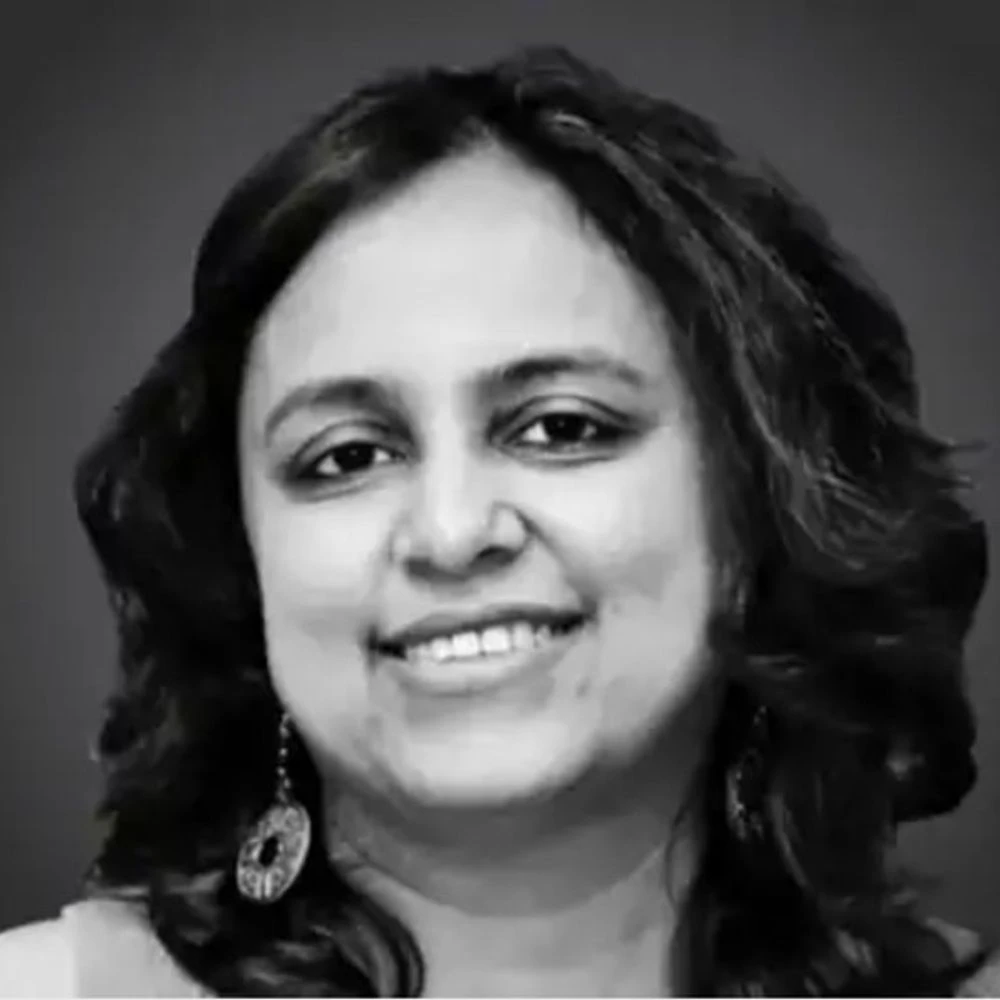
Rashmi Bansal's column: There is some energy, there is some talk... Hello India, good morning!
Jaigaon in West Bengal is a common city in the country. Loudspeakers are playing in the market, pandals are decorated. People are talking, eating on the streets. And there is a small gate in the middle of this chaos. Present the passport and open the SIM: Without saying anything, you reach a new world. Bhutan! A small country confined in the lap of mountains, which dances to its own tune. As soon as you cross the border, you feel at ease. Orderly, clean, no noise. People look healthy, and happy too. The wind is the same, but the air is new. Well, as we moved towards Thimphu, the air also chang
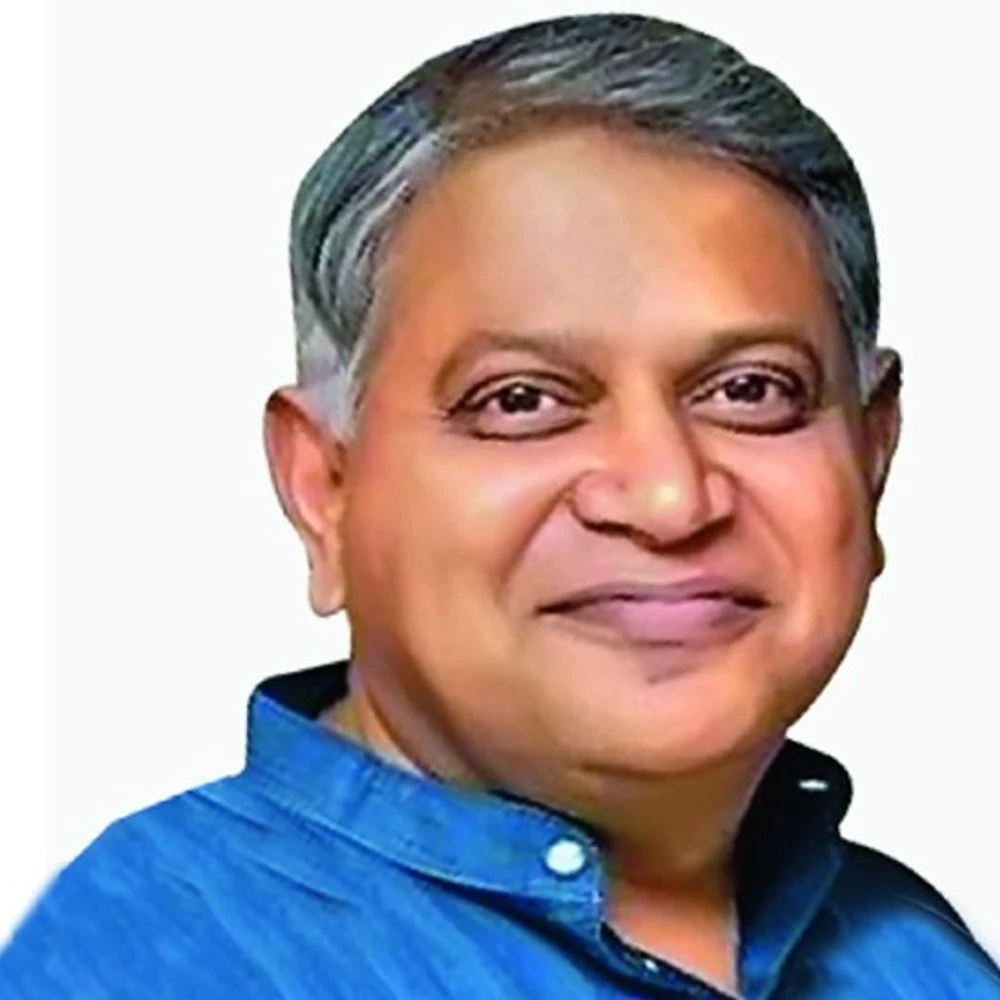
N. Raghuraman's column: If money cannot reduce someone's pain, then it has no meaning
I was new to Pune. Till 2008, I was just a visitor here. While working on a project that year, I arrived at a meeting of a well-known celebrity in Pune with one of my reporters. He was about to make a public announcement. The person addressing the meeting was sitting on the stairs, which was his style. While all the reporters were standing around him. This is because he had booked the cheapest place to meet the journalists. It was not even possible for a late arr like me to see them. I stood quietly at the back of the crowd, as I could hear their voice clearly. His unique, charming and extreme
Pawan K. Varma's column: Accepting responsibility for one's actions is also a form of religion
What is religion? The word 'Dharma' is derived from the root 'dhru', which means to hold and to keep. Religion is generally translated as duty, morality, morality, law or the moral order that sustains society. But none of these words convey the broader meaning of religion. In the Hindu view, religion is the way to find a way through the moral complexities of existence. Dharma does provide a clear moral framework for conduct, but it is not a rigid set of rules like the 'Ten Commandments' of the Bible. Human conscience and behaviour have given Dharma scope to be influenced by a number of factor
Palki Sharma's column: Will a strong "Muslim-NATO" on paper work in reality?
Saudi Arabia, Pakistan and Türkiye took steps towards activating their "Mecca alliance" (or so-called "Muslim-NATO") on Monday (October 5). When the Houthi missiles fell on Saudi Arabia for the first time, the question arose whether Pakistan would come forward to protect Saudi Arabia? But for a month, Pakistan did not take any action. There were strong reasons for its hesitation. At least the lack of military capability cannot be the reason for this. Pakistan is ranked 14th in the Global Firepower Index. It has 6.60 lakh active and 5.50 lakh reserve soldiers. There are about 1400 aircraft in
Aarti Jerath's column: Congress's strategy in UP politics is now changing
The political chessboard of UP is now starting to take shape. In this sequence, the Congress has made an interesting move and appointed a Brahmin woman Aradhana Mishra 'Mona' as the state president. This decision is a bold move of the Congress – an attempt to connect the community with itself, which has been a strong supporter of the BJP since the political scenario of UP changed from the politics of Mandal-Kamandal. The Congress is trying to challenge the same by going to the BJP stronghold. In UP, the Congress is fighting for its survival. In the 2022 assembly elections, its vote share was
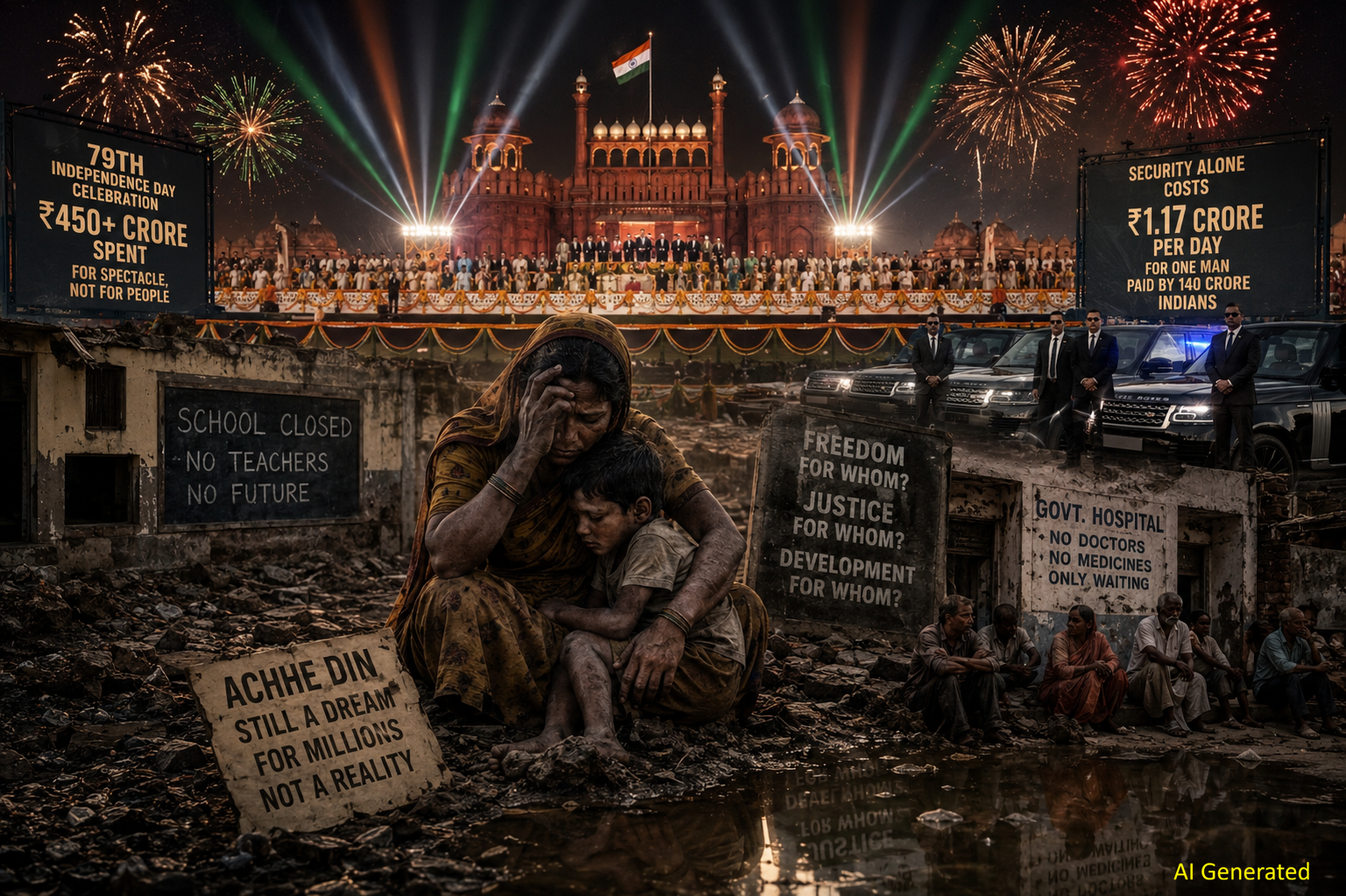
Independence Day 2026: Crores Spent on Spectacle While a Nation Still Waits for “Achhe Din”
15 August 2026: As the last echoes of the national anthem faded and the sky over the Red Fort lit up with fireworks and laser displays, the Government of India and various state governments had once again spent staggering sums to commemorate the 79th anniversary of India’s Independence. Official estimates put the combined expenditure by the Centre and states on parades, cultural programmes, lighting, security, advertisements, and associated events at well over ₹450 crore. In Delhi alone, the grand show is believed to have cost more than ₹180 crore. Yet behind the choreographed grand
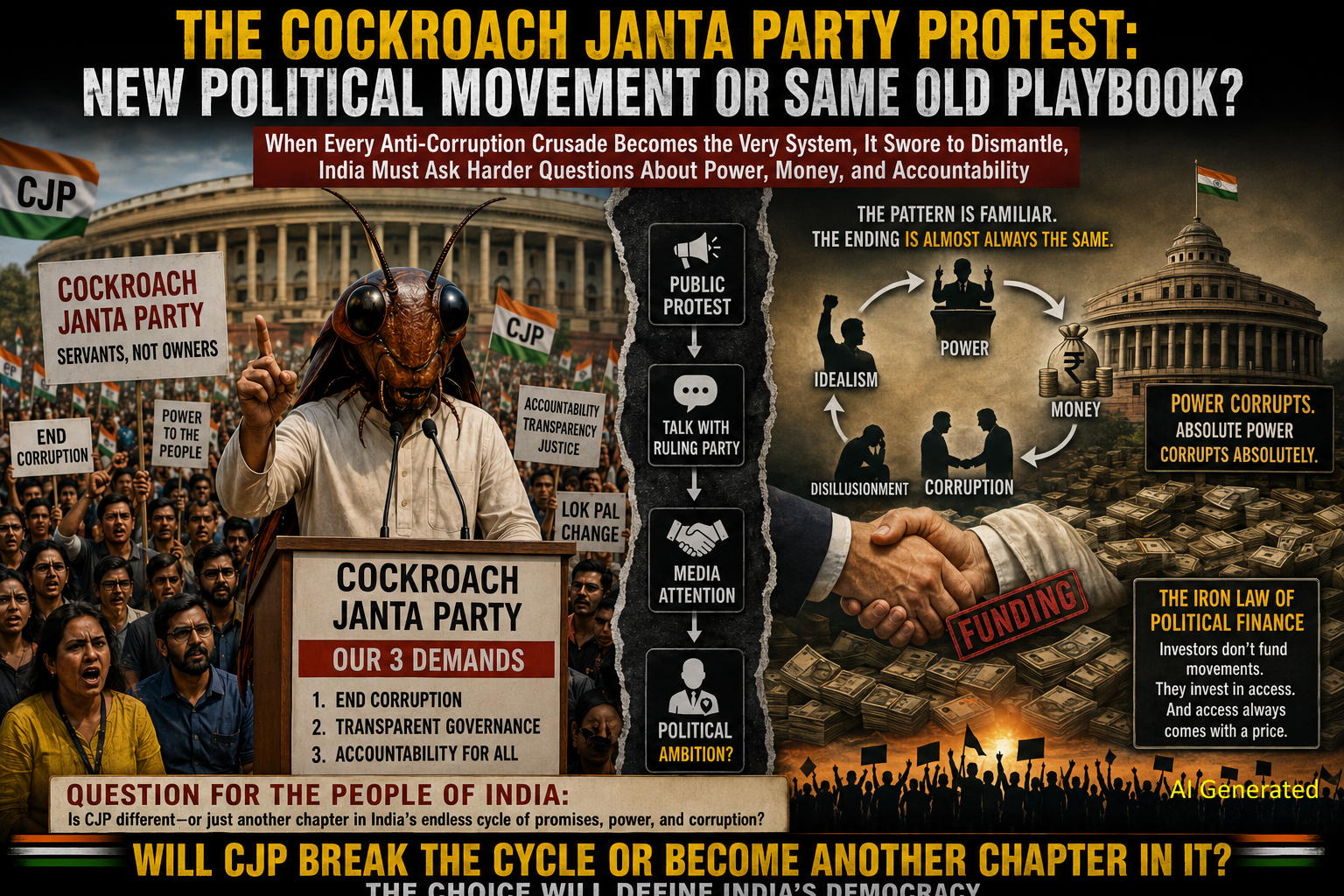
The Cockroach Janta Party Protest: A New Political Movement or the Same Old Playbook?
When Every Anti-Corruption Crusade Becomes the Very System, It Swore to Dismantle, India Must Ask Harder Questions About Power, Money, and Accountability In a familiar tableau that has played out repeatedly across India's democratic landscape, the Cockroach Janta Party (CJP) has launched a high-profile public protest, complete with demands directed at the ruling dispensation, media-friendly optics, and the unmistakable ambition of political relevance. The party has put forward three demands and entered into public discussions with the ruling party — moves that, on the surface, suggest
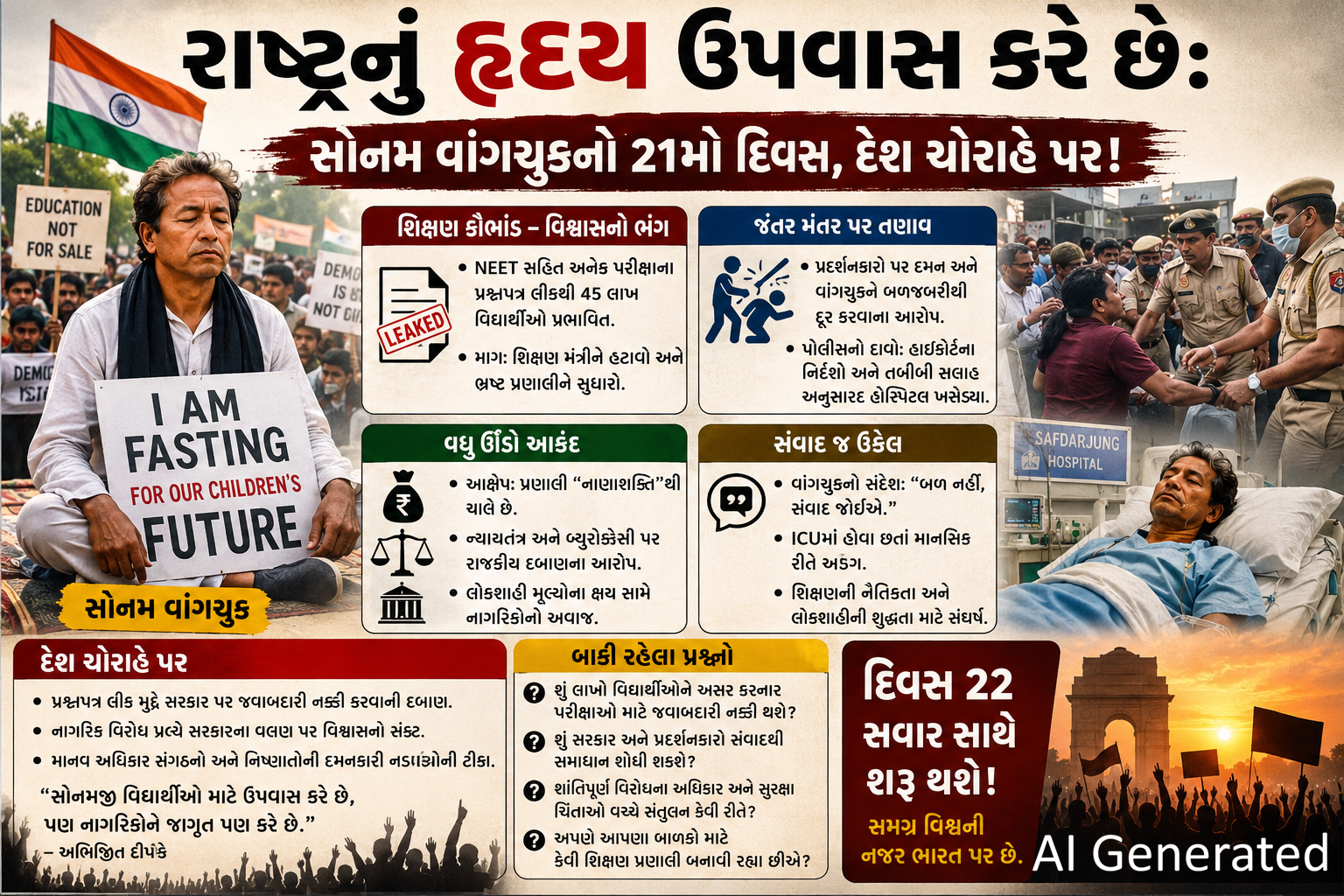
“Our Children Deserve Better”- Education Reformer Sonam Wangchuk's Day 21 Ignites Soul-Searching Over Education Crisis, Police Action, and the Erosion of Democratic Trust
Heart of a Nation Fasting: As the scorching sun set over Jantar Mantar on Saturday, July 18, 2026, the air was thick with a palpable mix of hope and anxiety. Climate crusader, innovator, and beloved educator Sonam Wangchuk entered the 21st day of his indefinite hunger strike, his frail body bearing the weight of a moral crusade that has sparked a national debate far beyond the improvement of India's education system. The examination paper leaks—affecting multiple competitive exams including NEET and state-level tests—have impacted an estimated 4.5 million students across India this
RECENT NEWS
- ED arrests Delhi-based agent in 'donkey route' case linked to Indians deported from US
- Sai Pallavi sees her ‘alter ego’ in ‘OM’ character Nithya Reddy
- ‘Jailer 2’: How Rajinikanth and Hrithik’s scene was balanced
- Sugarcane price deadlock nears resolution after 10-hour discussion with Karnataka CM D.K. Shivakumar
- Teja Sajja says ‘Zombie Reddy 2’ will feature grander action and visuals